FSG’s journey into wet processing unlocks PFAS remediation in Bergen, Norway


Turning contaminated soils into value with CDE advanced washing technology...
Fana Stein & Gjenvinning (FSG) is redefining how the industry tackles contaminated soils. Materials once destined for landfill are now being transformed into high-quality, reusable construction products at FSG’s advanced soil treatment facility in Bergen. Delivered in collaboration with wet processing specialist CDE and EPC contractor Nordic Bulk, the project provides a powerful model for sustainable resource recovery and environmental protection.
Originally designed to process soils contaminated with hydrocarbons and heavy metals, the facility has evolved to address one of the sector’s most pressing challenges when PFAS (per- and polyfluoroalkyl substances) were discovered in the feed material. Now, it is becoming a model for how infrastructure can evolve to meet emerging environmental threats while maintaining both environmental and commercial performance.
From landfill to lifecycle
FSG AS was established in 1954 and then specialised in the refinement of crushed rocks, operating a former pit on the site of the now multi-use Fana Stadium in Rådal, south of Bergen. As rock resources in the area depleted, the company transitioned to underground mining inside the Stendafjellet mountain, in Rådalen. With license for the disposal of contaminated material in 18 mountain halls in Stendafjellet, it facilitates the safe disposal of an estimated 200-250,000 tonnes of contaminated CD&E waste annually.
FSG’s wet processing journey began with a simple but pressing problem: too much valuable material was being lost to landfill.
“We were seeing huge volumes of material coming in. Material that still had value, going straight into landfill,” explains Joar Hovda, Environmental Manager at FSG.
At the same time, tightening regulations and market demand were shifting expectations. A revised landfill permit made the direction clear: if materials could be recycled, they must be recycled.
Combined with increasing demand from construction clients for recycled aggregates, FSG recognised an opportunity to fundamentally rethink its operation not just managing waste but recovering value.
CDE’s director of business development, Eunan Kelly, said better use of recycled materials reduces both the industry’s waste burden and its reliance on finite natural resources.
“But ‘good’ waste material is getting scarce, he cautions.
“We’re now at a stage where it is absolutely necessary to process more challenging waste streams if we’re to meet long- and short-term sustainability and carbon neutrality goals."
Advanced technology for complex waste streams
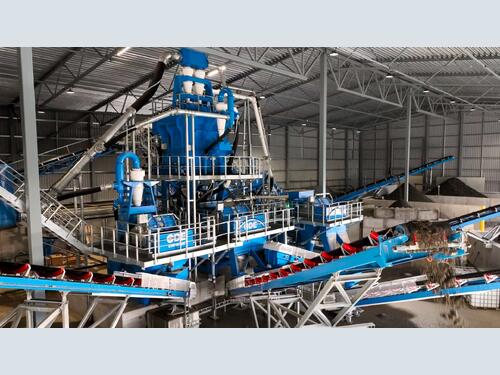
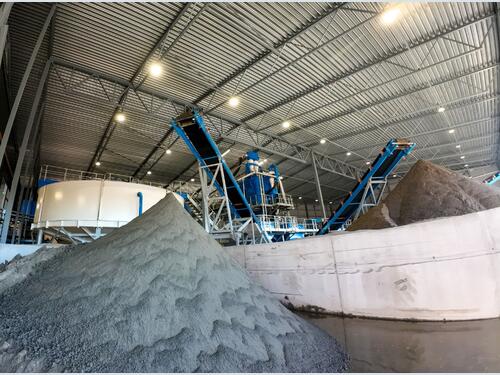
Located just south of Bergen and partially housed indoors to reduce environmental impact, the plant features a full suite of CDE technologies - including screening, scrubbing, classification and organics removal, as well as primary water treatment. Drawing on decades of experience across mining, quarrying, recycling and environmental applications, along with a deep understanding of material characteristics and contaminant behaviour, CDE has engineered these processes to work as a single integrated system to enable maximum liberation of contaminants from the sand and aggregate fractions, concentrating them into low-volume waste streams, including filter cake for disposal at FSG's licensed landfill facility. The wash plant therefore enables the production of valuable industry-specification construction materials while significantly reducing the volume of material requiring landfill disposal.
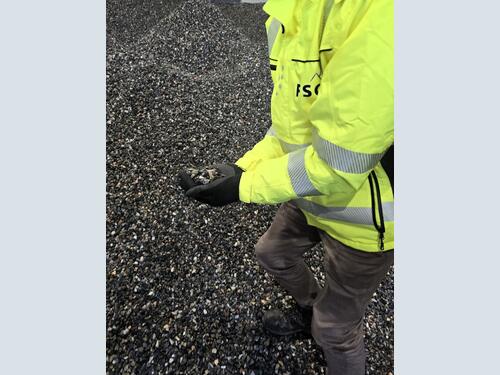
With a processing capacity of up to 120 tonnes per hour, the wash plant enables up to 80% of the incoming contaminated materials suitable for washing to be recovered as valuable sand and aggregates, producing over 100,000 tonnes of recycled construction materials. These products are reused across a range of applications including pipe bedding, drainage, structural fill, foundation support and asphalt production, creating additional value from materials that would otherwise have been lost to landfill.
The PFAS challenge: a catalyst for innovation
During operations, FSG identified the presence of PFAS in incoming materials - a discovery that could have posed a significant operational and environmental risk.
“Once we started sampling, we found PFAS in the feed material and in the process water,” Hovda explains. “We quickly realised this was an issue we needed to understand and manage properly.”
"PFAS behaviour in a washing process is complex. Our extensive work on challenging waste streams has given us a deep understanding of how PFAS behaves in the soil, water and clay, explains Kelly.
“Data from seven customers’ PFAS-contaminated soil washing plants currently operating around the world show that up to 99% of the PFAS is liberated and separated from valuable fractions and typically concentrated in filter cake and water.
"For CDE, the ultimate objective is the remediation of 100% of contaminated material. That means removing PFAS from every fraction within the process, including the filter cake, which has traditionally presented the greatest challenge. To achieve this, we have developed a solution which combines attrition, density and centrifugal separation technologies in a way not previously applied to PFAS remediation. Developed through years of research, testing and operational experience, the process unlocks full resource recovery while maximising PFAS removal. This breakthrough enables customers to recover more clean, reusable material while reducing waste volumes and processing higher levels of contaminated soils without the risk of the filter cake exceeding PFAS landfill thresholds.
"Further to our success in liberating the PFAS contamination from the sand and aggregates, CDE is currently in the advanced stages of developing a process to reduce the PFAS concentration in the filter cake. This is a significant development as it will enable the processing of higher levels of contaminated soils without the risk that the filter cake will exceed PFAS landfill levels", Kelly reveals.
Dedicated testing conducted by FSG further validated the effectiveness of the treatment process. Based on feed material containing 5.8 to 10 µg/kg of PFAS (35), the vast majority of PFAS was removed from the contaminated soil during the washing process, with most being concentrated into the filter cake while a small proportion typically reported to the process water stream.
To ensure operational flexibility and compliance with discharge requirements, FSG has installed a two-stage tertiary water treatment system comprising a magnetic particle separator to remove heavy metals and persistent organic pollutants (POPs), followed by activated carbon filtration for PFAS removal. The system enables treated water to be discharged to the municipal wastewater network when required, while supporting efficient water management across the site.
PFAS-bearing fractions are currently managed through disposal at FSG’s licensed landfill facility. In contrast, the construction grade fractions are considered clean and suitable for reuse once approved by the authority.
Circular economy and environmental legacy
Hovda stated that the results achieved are below the permissible levels set by the County Governor – in the water, the sand and aggregates. "This project reflects our commitment to environmental responsibility and innovation. By investing in advanced treatment technologies, we’re not only protecting our local environment but also setting a new standard for contaminated soil management in Europe."
Eunan Kelly concludes: "PFAS is one of the most complex challenges facing the waste recycling sector today. This project proves that with the right technology and collaboration, it is possible to recover value while supporting environmental goals and build a sustainable business case around even the most difficult waste streams."
Associated Businesses