Working for better roads: use CIL funding as an additional revenue stream for highway improvements
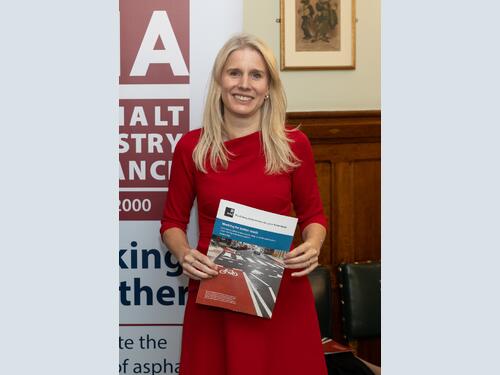



The All-Party Parliamentary Group for Better Roads has issued a report calling for central government to make it easier and more transparent for local authorities to invest funds from the Community Infrastructure Levy (CIL) for improving local roads. The report draws on research that shows that more than £2.2 billion in CIL contributions remains unspent by planning authorities in England and Wales – funds that could be used to help address the £18.62 billion backlog of carriageway repairs.
The overall poor user-experienced condition of local roads has been driven by decades of inconsistent levels of funding, an ageing network and the increasing impact of more, heavier traffic along with more extreme weather events.
Local authorities have a legal obligation to maintain their road network in a ‘safe and suitable condition’ . However, analysis for the APPG for Better Roads, informed by the Asphalt Industry Alliance’s Annual Local Authority Road Maintenance (ALARM) 2026 survey report, indicates that local authorities in England and Wales are facing an average in-year (2025-26) budget shortfall of £8.1 million per authority – a funding gap of more than £6,700 per mile of road.
In addition to funding from central government and local sources, additional sources are available to local authorities from developer contributions such as Section 278 highway agreements and Section 106 planning obligations. Another source is CIL, which was introduced through the Planning Act 2008 and is designed to help local authorities deliver the infrastructure needed to support development – including roads.
Yet analysis carried out for the APPG for Better Roads found that only 30 per cent of respondents to the ALARM survey reported they were using CIL funds for highway improvements and just 14 per cent stated that any of this was spent specifically on improving the road surface and structure.
Rebecca Paul MP, Chair of the APPG for Better Roads, said: “Poor road conditions can impact on our everyday lives, from the cost and inconvenience of damage to vehicles to potentially causing accidents and injury, particularly to vulnerable road users such as cyclists and motorcyclists. It’s an issue I am passionate about and I have campaigned for fairer funding for roads as both a local councillor and an MP for a number of years.
“For those planning authorities that charge the CIL, it provides an additional source of funding that may successfully be invested in addressing the backlog of repairs and delivering smoother, safer journeys for all roads users while boosting productivity and supporting economic growth.
“Importantly, utilising both existing and future CIL could support the Government’s aims of improving local roads and addressing the backlog of repairs to tackle the ‘plague of potholes’, without the need to secure any additional funding.”
In the report, the APPG for Better Roads calls on Government to:
- Issue enhanced guidance to local authorities on how to lawfully charge and allocate CIL to make these funds available for improving the condition of local roads.
- Consider amending current CIL legislation to broaden the scope for funding from this source to be used to supplement ongoing road maintenance budgets.
- Encourage local authorities charging CIL to identify, publish and protect a defined proportion of strategic CIL for local improvements supported by greater collaboration between local highway and planning teams.
- Act on the guidance in the NAO’s Improving local areas through developer funding recommendations to encourage more planning authorities to charge the CIL.
The full report ‘Working for better roads: Community Infrastructure Levy funding: an additional revenue stream for highway improvements’ is available to download from the APPG for Better Roads website: APPG Resources – The All Party Parliamentary Group for Better Roads
David Giles, Chair of the Asphalt Industry Alliance (AIA), said: “The condition of local roads is a key issue with the voting public yet, despite this, data from our 2026 ALARM survey reports that the backlog of carriageway repairs in England and Wales has reached a record £18.62 billion. If charged, the Community Infrastructure Levy could unlock significant extra resources to help local authorities tackle the backlog of repairs and improve carriageway conditions for all users, as well as boosting local economies and connectivity. It makes sense that Government should support local authorities to invest unspent CIL funds in highway improvements by issuing enhanced guidance and broadening the scope of the current legislation to make this easier to achieve.”
Lyle Andrew, Institute of Highway Engineers (IHE) Chief Executive, said: “Our local roads are a shared asset and the condition of them has an effect on most services a council delivers. With the backlog of repairs at record levels and resurfacing only taking place once every 97 years, it’s imperative that local authorities need to utilise all available funding.
“IHE encourages a collaborative approach across departments to maximise the benefits of how and where CIL funds can be used, including towards planned preventative maintenance of the highway network."