Tackling ‘supply chain anxiety’ with industrial bearings


How smarter sourcing can reduce risk and strengthen resilience against supply chain disruptions...
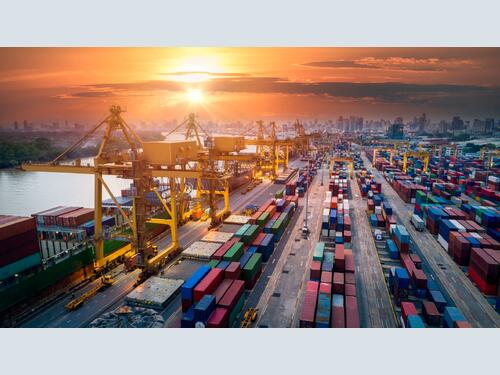
The Chartered Institute of Procurement & Supply (CIPS) reports rising “supply chain anxiety” among businesses as disruptions intensify, driven by natural disasters and geopolitical events. Most notably, the recent closure of the Strait of Hormuz waterway by Iran has been labelled as “the largest supply disruption in the history of the global oil market” by the International Energy Agency (IEA). Here, Chris Johnson, director at SMB Bearings, explains how specialist industrial bearing suppliers can help mitigate delays, shortages and rising costs by strengthening sourcing, responsiveness and supply chain resilience.
Industrial bearings, although small components in complex oil and gas facilities, can lead to severe operational downtime if their arrival is delayed or disrupted. Pumps, compressors and cranes are just some examples of machinery that would remain idle without bearings. The availability of critical rotating components should therefore not be a secondary concern but, instead, an operational priority.
Global supply chains have long prioritised cost efficiency through lean inventories, extended lead times and offshore manufacturing. While effective at reducing costs, these strategies have introduced significant vulnerabilities. However, from pandemic-era port closures to ongoing geopolitical tensions, these vulnerabilities have been exposed and intensified.
As a result, “supply chain anxiety” — the concern that critical parts may not be available when needed — has increased. However, considering the pandemic-era port closures to the ongoing reverberations of geopolitical conflict, the vulnerabilities of single-source supply chains have been fundamentally shaken. As a result, what the CIPS calls “supply chain anxiety”, a reasonable concern that the parts you require might not be where you need them, has increased.
What bearings do in industrial settings
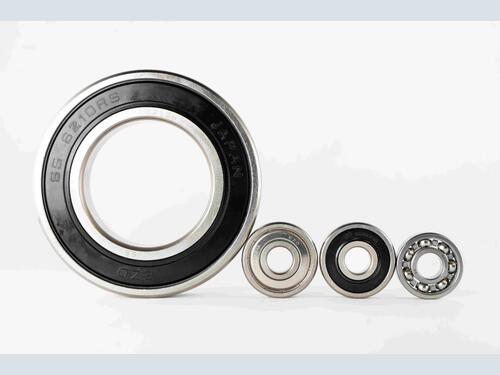
We can understand the big risks to supply chains by paying attention to small components, like industrial bearings. Bearings are essential components across oil and gas value chains; the mechanical foundation on which rotating and reciprocating equipment depends.
Radial and thrust bearings for example, play a crucial part in supporting the pump shaft and absorbing the forces generated during fluid transfer. Centrifugal pumps, which function to move crude oil and other refined products and process fluids through pipelines and refineries, rely on bearings functioning correctly. Incorrectly specified bearings can lead to a multitude of problems such as shaft misalignment, increased vibration and compromised seal integrity, all of which can lead to equipment damage or unplanned shutdown.
Bearings also play an important role in gas compressors, which work to pressurise natural gas for transportation and processing. These bearings must handle high radial loads and axial thrust simultaneously, often at elevated speeds and temperatures. Conditions such as these require bearings with specific internal clearances, heat-resistant steel grades and appropriate lubrication, typically heavy-duty greases or oil-mist systems, to maintain film thickness and prevent metal-to-metal contact under sustained load
Gearboxes, used extensively across drilling rigs, pump drives and rotating machinery, also rely on both rolling elements and plain bearings to transfer torque efficiently between shafts. In this instance, bearing specification will directly affect gear mesh alignment, and therefore, the efficiency and longevity of the entire drivetrain. Worn or incorrectly replaced bearings in gearboxes will affect every component the gearbox supports.
In refineries and offshore installations, overhead cranes rely on bearing design. Slewing ring bearings, which enable the rotation of crane jibs under heavy load, need to be able to withstand combined radial, axial and moment loads. If the wrong material or sealing arrangement is specified, crane jibs in salt-laden or chemically aggressive atmospheres could experience accelerated corrosion.
None of these parts are interchangeable commodities. Each application demands a bearing chosen for its specific load rating, speed capability, operating temperature, lubrication compatibility and environmental resistance. Replacing a bearing with an incorrect specification or simply operating without a replacement when stock runs out, can compromise equipment integrity and, in the worst cases, create serious safety risks. These issues cannot be afforded during supply chain disruptions.
When supply chains tighten, specialist components suffer most
The above problems are exacerbated when high-specification industrial bearings become harder to source as global supply chains come under pressure. Some standard volume bearing product lines might be held by generic distributors. But suppliers may lack the depth of stock or technical knowledge to fulfil urgent, application-specific requirements. For example, a spherical roller bearing specified for a high-load gearbox application, or a double-row angular contact bearing for a multistage pump, may simply not be available off the shelf when a disruption strikes.
In these situations, sourcing strategy matters. A specialist bearing supplier, one that holds substantial UK stock across a broad range of industrial grades, maintains relationships with multiple manufacturing sources and can advise on technically equivalent alternatives, can turn a potential crisis into a manageable event.
Rather than depending on a single supplier from a single country, well-structured sourcing strategies build redundancy into the supply chain. This might mean dual-sourcing from manufacturers in different geographies, holding strategic buffer stock for high-criticality applications, or working with distributors who can rapidly cross-reference and supply alternatives when primary sources are disrupted.
Building resilience, not just holding stock
According to the World Economic Forum (WEF)’s January 2026 Insight Report, 74 per cent of leaders “see resilience as driving growth, not managing risk”. Whilst stock availability is a necessary part of supply chain resilience, but it is not sufficient on its own. Understanding where components come from, where the single points of failure are, and what contingency options exist is equally important.
Through close collaboration with maintenance and engineering teams, specialist bearing suppliers can aid in mapping bearing requirements across facilities, identifying high-criticality items and recommending appropriate stock holding levels. This type of close work can help transform the supplier from a vendor into a strategic partner, one who shares responsibility for operational continuity.
When specific bearings become unavailable, knowing whether alternative specifications can perform safely, also requires genuine engineering knowledge. A specialist supplier can bring understanding of tolerance classes, load ratings, material grades and lubrication compatibility to the table, which purely transaction distributors cannot.
Supply chain anxiety demands a strategic response
The disruptions shaping the present landscape are not anomalies. Climate-related logistic disturbances, geopolitical instability and the ongoing restructuring of global trade routes suggest that supply chain uncertainty is here to stay. For industries like oil and gas, which operate around the clock and cannot afford unplanned stoppages, the response must be equally enduring.
This means moving beyond reactive purchasing and towards more proactive models that treat bearing supply as a strategic function as opposed to an administrative one. It also means forging relationships with suppliers who invest in stock, expertise and responsiveness. It also means accepting that the cheapest option at the point of purchase may not be the most cost-effective option when downtime is factored in.
Even though industrial bearings are small components, the decisions made around how they are sourced, stocked and managed have consequences that extend far beyond the bearing itself. From spherical roller bearings in high-load applications and tapered roller bearings in heavy-duty machinery to deep groove ball bearings in high-speed equipment, or angular contact bearings in more specialised systems, all have a critical role to play in combatting “supply chain anxiety”.
For more information on SMB Bearings' range of industrial bearings and their approach to supply chain support, visit smbbearings.com