Taking to the water
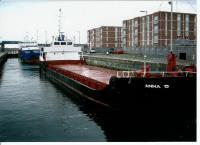
As a student I advanced the argument that there would be an increasing demand in the future for the internal movement of freight by waterborne transport. My thesis was simple. Britain, as an island economy, would in time be confronted with worsening levels of congestion as traffic volumes outstripped available road space. In parallel, fuel as a finite resource would become extremely expensive and concern would grow about the environment. True, in those days terminology such as global warming, climate change, food miles or carbon footprint were not in vogue. Nonetheless, all the warning signs were there if one took the trouble to look.
My tutor took a dim view of my ideas. He maintained that the cost of double handling, its slow speed, suitability only for long distance and lack of modern infrastructure meant that road would continue to dominate and there was little future role for water transport. But consider for a minute its advantages.
Nowhere in Britain is further than 75 miles from the sea. Indeed, there are over 300 ports in the country and most major conurbations can be served direct by a port, a major river or ship canal. A 1000 tonne ship uses a fraction of the fuel in comparison to road transport, while at the same time removing 100 lorry trips off the road.
My student ideas bear increasing fruit each day. Not, however that I take much pleasure in the present transport situation, which I view with some sadness over lost opportunities.
For example, despite the best transport brains in the country continually warning governments for decades that their policies were unsustainable and the need for radical action, this has not happened. Instead, the road vehicle population has reached 33 million, while congestion and fuel prices are higher on the agenda. Congestion, in particular has inherent negative commercial implications for modern logistics in terms of reliability, operational efficiency, increasing cost burdens, while degrading the image and efforts of the industry.
True, there has been much official talk about taking pressure off the road network and diverting more freight traffic to rail and water. Unfortunately, in many cases that is all it has been - talk and insufficient hard action or leadership from governments. However, change is in the air not because of government, but despite their lack of energy and enterprise to drive forward new environmental initiatives for industry and the country. Current changes in modern transport logistics are increasingly being driven by market forces, in particular rising fuel prices, and the requirement by large companies to demonstrate corporate and social responsibility in how they move things around the country.
KD Marine (UK), a north west based shipping company has been pioneering the use of inland waterborne freight transport for almost a decade. In 1998 the company began a long term contract to transport grain from Liverpool via the Manchester Ship Canal for the food conglomerate RHM Group (Rank Hovis) to its mill at Trafford Park. Each year the mill receives over 100,000 tonnes of grain. Without foresight and initiative by those concerned this freight traffic would have been transported by road. Building upon this experience KD Marine is now also transporting Welsh slate for Alfred McAlpine from north Wales to the port of Garston and Trafford Park, again an operation that is making a contribution to transport sustainability and carbon footprint reduction.
During recent months we have seen many large companies declare their commitment to a greener environmental agenda, backed by money and action. This has spilled over towards the use of waterborne freight transport.
For example, on the River Severn water transport is being used again for the first time in over ten years to move freight. Today, barges are being used on the river to transport over 200,000 tonnes a year of aggregates for CEMEX UK Construction Services.
But there is so much more in the pipeline where waterborne freight transport can prove its value. In coming months and years a number of large scale developments, all capable of a water door-to-door delivery, are due to be built.
Planning permission has been granted for a £90 million deep-sea container berth development of the River Mersey for the Mersey Docks & Harbour Board. When complete this will provide a major gateway for container trade with North America.
Increasingly, there is recognition that waterborne freight transport is becoming more competitive, with the added bonus of being sustainable and environmentally friendly. With industry will and a less passive role by government it could in time become more of a reality.
K D Marine (UK) Ltd
The Boathouse
Mersey Road
Runcorn
Cheshire
WA7 1 DF
UK
T: 01928 567 359
F: 01928 500 989