Rotators vs Rotating Forks: Selecting the correct attachment for the Job
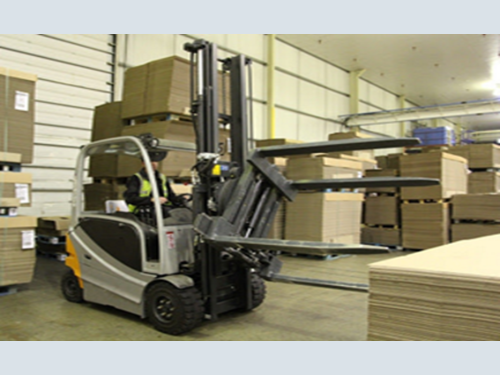


In material handling operations, the terminology can be confusing especially in the case of fork rotators and rotating forks. Whilst they might sound similar, these attachments have their own unique operational uses, strengths and limitations.
Understanding the difference helps operators choose the right attachment for safe and efficient load movement and also request the correct training course.
Functions and Uses
Fork Rotators
The forks are attached to a rotating frame meaning that the entire fork carriage will rotate, typically up to 360 degrees. Fork rotators allow for controlled rotation of the load for disposal or repositioning without manual handling.
This attachment is commonly used to emptying bins, skips, or containers, handle waste, recyclables, or bulk materials. If your site has drums or hoppers, you will normally find fork rotators on your forklift trucks for tipping.
Rotating Forks
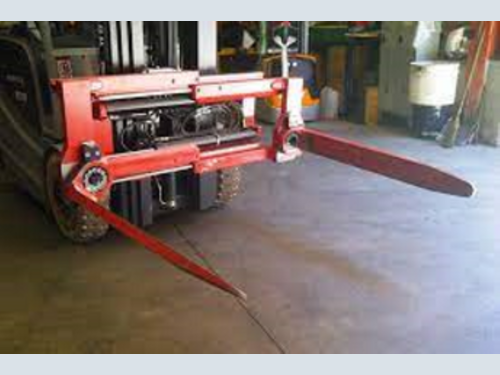
In contrast, the carriage plate does not rotate, but the forks themselves rotate independently of each but still work as a pair. This allows the width of the fork to clamp the load. Depending on the design, when rotating forks are used in this way, they can be used as a clamp or to carry out a lift that cannot be completed in a standard fork setup.
Predominately found in industries where bulk handling is required such as building materials, waste and resource management and warehousing and distribution. This attachment is normally used to handle palletised and bulk loads that require clamping.
Safety Reminder
When using fork rotators, it’s important to remember that the rotation of any load will affect the stability of the machine. As the rotator tilts or inverts a load, the weight distribution shifts and so does the load centre. Operatives need to understand the effect that the attachment has on the stability to prevent incidents such as tip overs. These have occurred when operatives are utilising rotating forks with a live load. As the load is tipped the movement of the load and the associated weight can result in a tip over being carried out incorrectly.
With rotating forks, operatives should never clamp a load with the thin part of the forks. The reason for this is that this part of the forks do not provide enough sufficient contact on the load, meaning that operators risk a dropped or damaged load.
If operators are unsure about any information regarding capacity, load types and controls, operators should always refer back to the manufacturer's specifications.
Compliance and Training
Legislation within the UK enforces that lifting attachments need to comply with LOLER (Lifting Operations and Lifting Equip0ment Regulations 1998) and PUWER (Provision and Use of Work Equipment Regulations 1998). Among other requirements, these regulations state that lifting attachments should be routinely inspections, operators need to be trained, and the equipment must be suitable for purpose.
Training is key to safe operation of any machine. Operators must understand how each attachment works, including variations in control mechanisms (hydraulic, mechanical etc) and how load capacity is affected when attachments are fitted. Pre-use inspections are important in order to identify any damage in hydraulics, gears, or other mechanical elements as well as to make sure that the rotation mechanisms are fully functional and safe to use.
Operators must also be taught best practices for handling loads correctly. This includes ensuring that loads are balanced and secure before rotating, knowing when to apply the brake and shifting to neutral before rotating the load and operators should be aware that they should never attempt to operate with the forklift truck in motion while performing rotation manoeuvres.
Using the wrong attachment can lead to load instability, equipment damage, or safety risks. Always match the attachment to the task—and ensure operators are trained in its correct use.
For further support regarding forklift attachments, please get in touch with a member of our team today who will be happy to help – 01246 386900.
Associated Businesses