Rental is the real deal for steel


More uptime, lower repair bills, reduced fuel costs...it’s a win-win-win situation as Liebherr Rental helps a British Steel plant continue producing virgin steel for infrastructure projects...
Over the years the Scunthorpe Steelworks has used a variety of methods to move and stockpile coking coal, a crucial ingredient in the manufacturing process. And over the last 12 months, almost all coke-handling machines have been supplied by Liebherr Rental in a deal that has provided the customer with greater flexibility and major cost savings.
‘We felt that we weren’t getting value for money with our former contractor,’ explained Nathan Turner, operations manager for the coal and coke handling facility. ‘This allowed us to look at the entire market for alternative solutions, which ultimately led us into conversations with Gareth Blythin, national rental sales manager at Liebherr Rental. From the outset, Gareth and his team were very proactive in assessing the work we were doing and tailoring the machines to suit our needs.
‘They structured a deal that included a spare loader and truck, allowing us servicing time when required rather than when necessary. While the fleet has been very reliable in operation, having the cushion of a spare machine gives us peace of mind that, should we encounter a breakdown, it will never be to the detriment of our operations.’
Area manufacturing manager Chris Spavin added: ‘We used to run road trucks for material movement but they were getting ripped apart by the abrasive material. This caused ongoing issues with damage and repairs, along with an uncomfortable ride for the drivers. That changed with the arrival of the ADTs, which are designed to handle tougher conditions. While the road-going trucks can carry nearly twice as much material as the ADTs, their slower speeds and higher maintenance costs balance out the cost per tonne.’
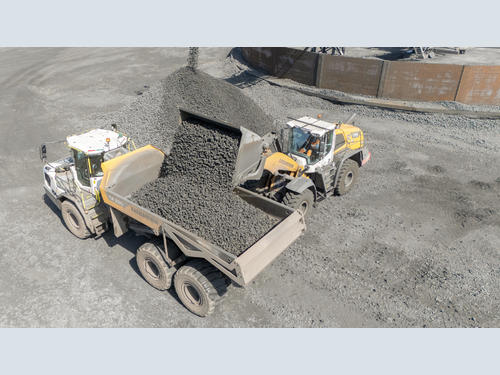
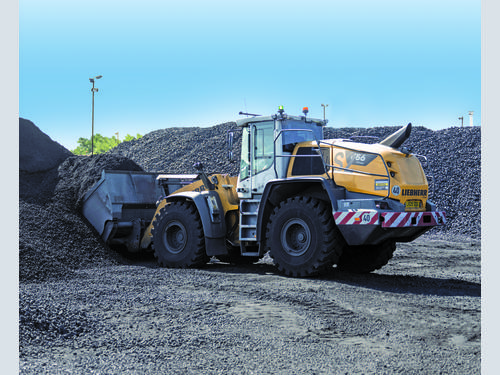
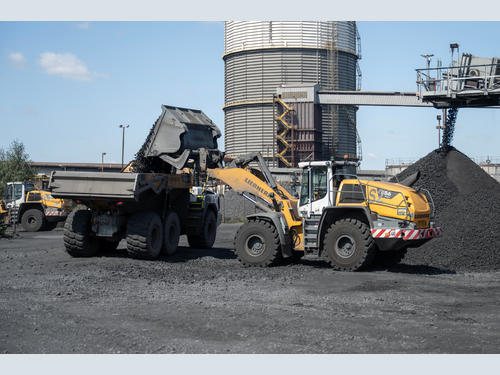
The current Liebherr fleet at the Dawes Lane site consists of six L 556 XPower wheeled loaders and five TA 230 articulated dump trucks. Those machines are supported by several articulated tippers that supply material to the nearby Appleby site via public roads.
While the TA 230 trucks are the main coke haulers, the site also uses a pair of similarly sized competitor models. ‘They do the same job as the Liebherr trucks, but without the added fuel efficiency and operator comfort,’ Turner noted.
The loading process is handled entirely by the fleet of 21-tonne L 556 XPower loaders, fitted with long-arm configurations and Ulrich hi-tip buckets. Powered by Liebherr 4-cylinder engines developing 183hp, the loaders easily cope with the lightweight material while returning impressively low fuel consumption – averaging just 10.4 litres per hour.
The additional reach of the long-arm version of the L 556 XPower adds 520mm of pin height to the loader. That extra reach and load-over height is an asset when loading the road-going articulated trailers, which sit much higher off the ground. Just three passes from the loaders – each equipped with a 5.5 m³ bucket – are enough to fill the trucks to capacity.
The loaders are in typical Liebherr Rental specification and include a host of features that would incur extra costs from many plant hire companies, such as a 360° camera system, an active personnel detection system at the rear and adaptive LED lighting – particularly useful at Scunthorpe where operations run round the clock.
It was left to Thomas Jaehrig, senior category manager at British Steel, to have the last word on “going rental”. ‘We felt there was a better, more productive and economical way of undertaking this operation. So far, we’re seeing the benefits; our repair bills are lower, our uptime has increased, our fuel costs have come down and they are simply a very good company to deal with.’
"Competitors models do the same job as the Liebherrs but without the fuel efficiency and operator comfort" - Nathan Turner, Operations Manager
The material
Coking coal is a crucial ingredient in the steelmaking process, specifically for primary steel production using blast furnaces. It is converted into coke, which acts as both a fuel and a reducing agent in the blast furnace. Supplies are sourced globally to ensure minimal contamination. Shipped into the nearby Port of Immingham, the coal is discharged on to trains and transported to Scunthorpe in loads of around 1,000 tonnes at a time.
Associated Businesses
