Planning for performance: how STADLER designs MRFs that deliver
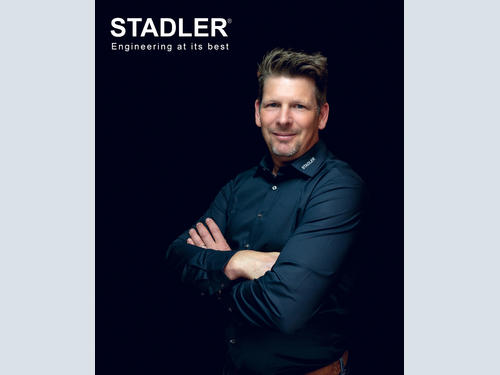


By Dr Benjamin Eule, Director at STADLER UK and Head of Commissioning.
Today’s Materials Recovery Facilities (MRFs) must carefully balance operational efficiency, regulatory compliance, high material recovery rates, and future scalability. At STADLER, we approach each project as a customised solution – one that reflects not only the material realities of today but also the uncertainties of tomorrow.
Understanding the input and the required output
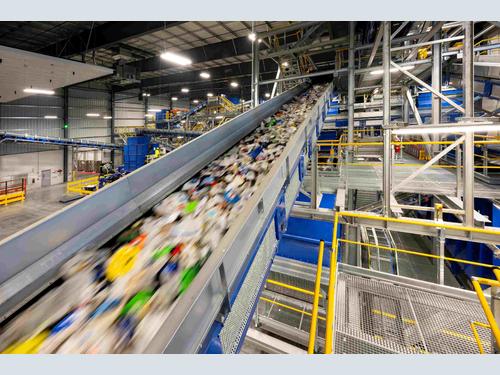
The first essential step in MRF design is understanding the feedstock. Whether the system is single-stream, dual-stream, or comingled, the input composition directly influences every downstream decision. Plastics, paper, metals, glass, and the contaminants mixed in determine the choice of equipment and how the plant is configured. We assess not only what is in the material stream but also the specific densities, particle sizes, and seasonal variations.
Building on this foundation, we establish performance targets: recovery rates, contamination thresholds, and the quality standards expected by downstream reprocessors or offtake partners. Whether you supply high-grade PET to a bottle-to-bottle recycler or mixed paper to a pulp mill, the MRF must deliver material that meets market expectations. That’s why product quality requirements are central to every STADLER planning discussion.
Designing from the ground up
Our project planning process is rooted in close collaboration with clients. During initial briefings, we identify input types, throughput targets, and specifications for the final product. A comprehensive site audit then takes place, alongside a feedstock sampling programme or a review of existing data.
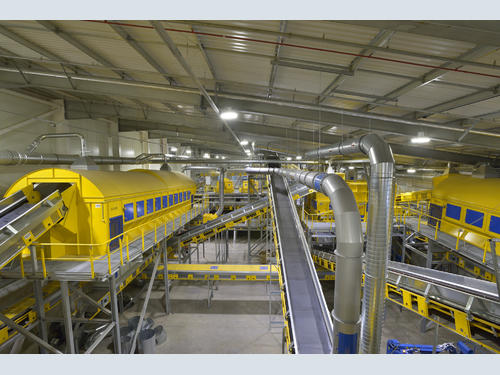
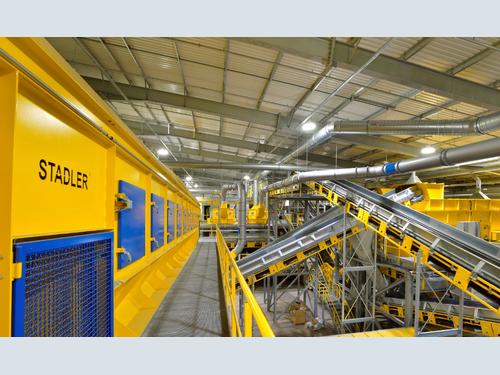
From there, we create conceptual 2D and 3D layouts to visualise the equipment and material flows. Each component – from screens and optical sorters to conveyors and bunkers – is specified based on simulations, trials, and decades of experience. Equipment is sized to accommodate peak loads and ensure smooth flow with minimal bottlenecks. We also plan for vehicle movement, material storage, and future expansion space during this initial phase.
Built-in flexibility for a changing waste stream
Designing for comingled input presents specific challenges. Achieving the right balance between flexibility and efficiency is key. Included in our designs are recovery conveyors, bypass routes, bidirectional conveyors, and backup systems for built-in redundancy. This will ensure operational flexibility and maintenance redundancy. The combination of using proven mechanical pre-sorting with precision optical sorters enables adaptability without sacrificing performance.
Planning for the future from day one
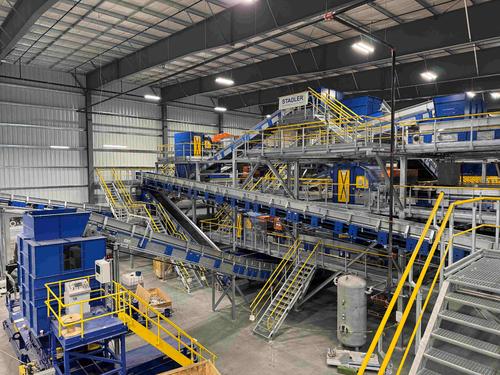
We design MRFs with scalability and compliance in mind as regulations and materials streams are constantly evolving. This may mean oversizing conveyors or screens where appropriate, leaving space in the layout for future equipment additions, and in turn, ensuring facilities are ready for stricter fire codes, health & safety standards and maintenance access requirements.
What success looks like
For STADLER, a well-designed MRF is one that runs efficiently and safely, with minimal downtime and maximum material recovery. Key design elements include ergonomic layout for operators, smooth material flow to avoid bottlenecks, and the right level of automation — always with room for human oversight and maintenance access.
Our projects at the Biffa MRF in Ipswich, UK, and the Republic Services Polymer Center in Indianapolis, U.S., demonstrate what’s possible when planning and collaboration begin early. In both cases, detailed feedstock analysis guided equipment choices, early design decisions reduced civil engineering costs, high automation delivered consistently clean output materials that command premium prices, and scalable layouts prepared the plants for future growth.
As material recovery becomes increasingly central to the circular economy, the role of smart, flexible MRF design becomes ever more critical. At STADLER, we see each project as infrastructure for a more sustainable future.